Showing posts with label cultural misencounters. Show all posts

Wednesday, 1 February 2017

Poder Verde - A preview

As you know I've been hard at work finishing the rewards for our kickstarter campaign.

As Songs of Ayahuasca CD is well on its way I've turned my attention to the second promised CD:

PODER VERDE!

Last week I spent two sleepless nights at DJ Akasha's house finishing the mix. We had a blast doing it and are super happy with the results.

Here are some selections from the 50 minutes mix, let us know what you think!


Here's the full liner notes

ABOUT THIS MIX

Poder Verde is a sound journey through some of my favorite Amazonian audio: Cumbia, the sounds of the rainforest, the radio ads of travelling curanderos and the songs of real ayahuasqueros.


LA CUMBIA

In terms of total listeners Cumbia is probably more popular all over South America than all the better-known styles (in the global North) such as salsa, merengue or bachata put together.

Cumbia originated in Colombia’s Caribbean coast and parts of Panama as a courtship dance practiced among the African population that had been brought to America as slaves. Cumbia unites West African rhythms, indigenous instruments (Milo and Gaita flutes from the Kogi and Kuna tribes) and European instruments (the Spanish guitar and later the accordion, brought by German immigrants.)

During the mid XXth century Colombian musicians created a more refined form of cumbia that became very popular, expanding all over South America, as time passed it gave birth to a great variety of regional styles. Today Cumbia is truly a panamerican music, there are distinct Andean, Argentinean, Chilean and digital cumbia styles, among many others. This mix contains a number of such styles:

“Classic” cumbias – The “reference” style, if such thing can even be said (tracks ) where the african influence is clear. I picked these tracks off a great mix from the Ritmo y Sabor blog 

…I haven’t been able to find out much about the original artists, other than Virgenes de Sol is from the Mexican Luis Ornelas

The Peruvian cumbia sound sprung as a distinct style in the early 60´s, when Henry Delgado took the accordion -which was the staple sound of the original Colombian Cumbia- and substituted it with the electric guitar, creating a sound that, by our standards, is reminiscing of surf music. Soon there were regional variations of the Peruvian sound. Juaneco y Combo, together with the fantastic Los Mirlos were the major originators of the Cumbia Amazónica, also known as Cumbia de Oriente or Poder Verde, a style which appeared in the 70´s together with the first oil boom of the Peruvian Amazon. The style has experienced a revival of sorts recently thanks to reissues by Barbes Records, and new re-recordings by bands such as Bareto.

This mix includes tracks from Cumbia Beats Vol. 1, The Roots of Chicha Vol. 2 and the less known but absolutely killer Ranil’s Jungle Party. If you love the music, please support the artists by buying some of these records

Cumbias rebajadas – Meanwhile something strange happened in the 70s in La Campana and Independencia, two rough neigborhoods in Monterrey, Mexico where Colombian Cumbias were very popular. People began to listen to the 45 rpm records at 33 rpm. It all started as an accident when Sonido Dueñez’s system malfunctioned and started playing cumbias at half the speed. The audience, instead of complaining, loved the new sound, the voices had become psychedelic, the rhythm hypnotic. People began to ask for their cumbias “rebajadas” (slowed down) Dueñez began to put out mixtapes of rebajadas, which became enormously popular.  Here's the full story

The style spread all over Mexico and then all over the Americas, eventually influencing other genres. It is believed, for example, that the Screw Rap style from Houston is a sort of rap rebajado.

The rebajadas on this compilation come from this great mix


JUNGLE FIELD RECORDINGS

Altogether I must have spent nearly 2 years of my life in the Amazon, including a few months deep in the jungle. I’ve been into weird experimental music and sound art for many many years, that means that I will actually listen to just about any sound (musical or not) with some interest. From that perspective the jungle soundscape is –to me- nothing short of sonic luxury. You’ll never find so many sounds, most of them beautiful, all of them interesting, going on at the same time, and with so much variation as the day progresses. I could listen to the jungle all day and a number of times, I have!

I’ve collected I this mix some of my favorite Amazonian field recordings, including sunrise and sunset, insect and frog choirs, and a full-on tropical rainstorm, starting with the first drops for rain, passing through the giant thunders and downpour, all the way to the growth of the rivers’ flow after the storm. I’ve placed them throughout the mix in a progression from calm morning to sunset, to rainstorm, to morning after, that in a way follows the progression of an ayahuasca experience.

If you want jungle field recordings without the cumbias, Paco Lopez, the big Kahuna of Spanish experimental sound is your man


AYAHUASCA MUSIC

I've also included number of Ikaros and other songs recorded during ayahuasca sessions.

The first track is called "Amazon Indian ayahuasca song.mp3" I downloaded it from soulseek many many years ago. I tried to find out more about it because I really like it, but I was unable. It remains a mystery to me. Let me know if you have any info about it.

The second ikaro is by Maria Luisa Tuesta Flores who worked with Howard Lawler at Spirit Quest. She was also one of Steve Beyer’s teachers, he wrote about her here

The third is Madre Ayahuasca, received by Rosa Giove and sung by Jacques Mabit

The fourth song is not technically an ikaro. It’s a song to Tonantzin, the Mexican mother goddess. But it was sung by a friend named Sofia the morning after an aya session. I really like it and decided to include it.

Fourth and fifth ikaros are from that same session, sung by Raffaelle Mackay with Fabian and Nico, refer to Songs of Ayahuasca for more info.


CURANDERO RADIO ADS

The last and perhaps the most original element of the journey are the curandero ads from Radio Tropical, Tarapoto. (on tracks ) In the Peruvian jungle where I’ve spent most time everybody that can afford a small radio receiver has one. Generally it’s on all day. It keeps them company while they work on the chacra. It was out of those radios that I began to hear ads for travelling curanderos, magical remedies, medicinal plants and removal of evil eye and witchcraft. I was completely fascinated by these ads (some as long as infomercials.) One part snake oil salesmen, one part XXIst century shamanism, seven parts crazy reverb and boombastic radio hosting, these ads read to me like the audio embodiment of the worst collective fears of Amazonian folk: the envy of others manifested as witchcraft, bad luck in crops, in business and in health, the loss of love though the calculated actions of others… The themes will be familiar to anyone who has spent time around indigenous and mestizo curanderos in the Amazon, yet I’ve never heard them expressed with such force and destructive paranoia. Scary stuff meant to scare, down to the ghoulish sound effects...

A friend in Madrid once told me “Advertising is the tax that the irrelevant have to pay.” Later a friend in Perú told me “No real curandero would ever buy an ad on the radio.” Indeed, real curanderos, like good chiropractors, don't need advertising. Word of mouth is enough to keep them relevant and fully booked. It is these travelling medicine-show curanderos, who pass by town and leave, and who therefore have no local reputation to bank on (or to protect) that need to fill the radio waves with ads as amazing and disturbing as the one’s you will hear here.

ENJOY!

It took Akasha and I a couple of sleepless nights to complete this mix, we hope you have as much fun listening as we had making it

Madrid, Jan 2017


Thursday, 2 May 2013

Joining the ICEERS Foundation and coming out in public

ENGLISH TEXT - (texto en español abajo)

It is with great joy that I announce that I have been asked to join ICEERS's board of directors as secretary. I am honored to be part of such an incredible group of people.

ICEERS is a charitable non-profit organization founded in 2009 by Benjamin De Loenen in the Netherlands and is dedicated to:

  • The integration of ayahuasca, iboga and other traditional plants as therapeutic tools in modern society
  • The preservation of the indigenous cultures that have been using these plant species since antiquity on, their habitat and botanical resources.
  • ICEERS is dedicated to marshall the forces of the ethnobotanical knowledge of the indigenous peoples and modern therapeutic practice, responding to the urgent need for efficient tools for personal and social development.


...as you can see I am feeling right at home! ;-)

ICEERS has promoted a number of important projects, from organizing conferences and training programs on Iboga, to keeping a close eye on the latest movements of the international drug authorities to ban ethnobotanicals.

It was on ICEERS’ request that the International Narcotics Control Board confirmed by letter that DMT containing plants such as the ones used in ayahuasca are not themselves under international control. In other words, until individual countries take steps to make ayahuasca containing plants illegal (like France did) they are not technically illegal, anywhere. That letter in itself has helped to keep a number of people out of jail in a number of countries like Spain and Chile.  (We must add that in some countries, like the US, taking those legal plants and cooking them together to make aya is in itself ilegal)

ICEERS is also currently running a program to test the purity of iboga extracts, so people know what they are using and more insight is gained into the quality, purity and possible contaminants of the available materials on the market.

They also helped fund the publication of Jose Carlos Bouso´s seminal study on long-term ayahuasca
use for the scientific journal PLOS, a respected online journal, making these important findings available for the scientific community as well as the general public. This is the largest study to date on the effects of long term ayahuasca use.

And there is a lot more coming... We all know how much misinformation and misunderstandings about ayahuasca and iboga is out there. The idea behind ICEERS has always been to make the best objective science-based information about these plants and their legitimate uses widely available. We have prepared a number of guides for first time consumers of ayahuasca and iboga, as well as guides for those interested in travelling to the Amazon and Gabon. But we are also working on a more ambitious project, an online help center where people with questions and concerns can consult one-on-one with experts on these matters. Going beyond the users, we are preparing a body of documents and guides for ayahuasca providers, from best practices to a set of minimum safety standards. The purpose is generate a series of guidelines to minimize risks and maximize benefits, to help draft a set of safety and ethics standards (like the plantaforma´s) that can help ayahuasca and iboga providers self regulate, in order to avoid situations like the one that took place in Chimbre.

So, like I said, I couldn't be happier to join an organization whose aims are so closely aligned with my own. On a personal note, I have always felt an affinity with Benjamin, who started as a documentary filmmaker, and ended up has an activist and advocate for the very plants he was filming. Benjamin made a documentary about Iboga (trailer here) in 2004, which became an international reference on this matter. What started as a personal interest as a filmmaker became much more, and began to demand from him a different type of commitment. It is a story that has many parallels with my own.

I think at this point I should confess that when I began began making a documentary about ethnobotanicals with Mark Ellam, my main motivation wasn't so much making a film, as it was getting closer to a topic that greatly interested me. The film gave me an excuse to travel, to contact perfect strangers whose work I admired and to ask them questions, what a great idea! More than 13 years later, and on my 4th documentary the results have been tremendously rewarding. But I have been feeling for some time that making films is not enough. It is as if the plants are demanding a bigger commitment, they have been so instrumental in my development that it is time to give back to them in a more meaningful way. It is time to move from generating information into more direct forms of action.

This has been manifested in my work the Asociación Eleusis, the Plantaforma, The Platform for the defense of Ayahuasca and now the ICEERS Foundation. It has been a gradual process of coming out in public. For many years I kept all my work with ethnobotanicals hidden under a slight pseudonym. For all documentary and ayahuasca publications I was Jeronimo M.M. For the rest of my other work, I went by my real name. It was a clean split. I had 2 email addresses, 2 facebook accounts, 2 lives.

I think it is a good time to put an end to that, and come out of the closet.

For the past 8 years my avatar, as Jeronimo M.M. has turned its back to the public gaze 


I think it is time to face the world


See you arround! .-)

PD if you want to know more about ICEERS´ activities please join our mailing list


TEXTO EN ESPAÑOL


Me da mucha alegría anunciar que he sido invitado a formar parte de la junta directiva de ICEERS como secretario.  Es un honor para mi unirme a un grupo de gente tan estupenda.

ICEERS es una organización sin ánimo de lucro fundada por Benjamin De Loenen en el 2009 dedicada a:
  • La integración de la ayahuasca, la iboga y otras plantas tradicionales como herramientas terapéuticas en la sociedad occidental
  • La preservación de las culturas indígenas que han utilizado estas especies botánicas desde la antigüedad, su hábitat y recursos botánicos.
  • Integrar el conocimiento etnobotánico de los pueblos indígenas en la terapia occidental actual, en respuesta a la necesidad urgente de herramientas eficientes para el desarrollo personal y social.


...como podéis ver me encuentro como en casa! ;-)

Desde su fundación ICEERS ha promovido toda una serie de importantes proyectos, desde la organización de conferencias y programas de capacitación, hasta el seguimiento de las actividades de las distintas autoridades internacionales de control de drogas con respecto a las plantas tradicionales.

Fue bajo petición de ICEERS que el International Narcotics Control Board confirmó por carta que las plantas que contienen DMT, como las que se usan en la ayahuasca, no están por si mismas bajo fiscalización internacional.  En otras palabras, hasta que los países tomen de forma individual las medidas oportunas para fiscalizar estas plantas (como ya ha hecho Francia) estas plantas no son tecnicamente ilegales, en ningún lugar.  Esa carta por si sola ha sido suficiente para evitar el encarcelamiento de varias personas en España y Chile.  (Una nota de caución: En algunos países, como EEUU, aunque las plantas son legales, cocinarlas para obtener ayahuasca es ilegal)

ICEERS también está llevando a cabo un programa para analizar la pureza de los extractos de iboga, para los facilitadores que trabajan con ella, y se gane un mayor conocimiento de la calidad, pureza y posibles contaminates de los materiales disponibles en el mercado.

ICEERS también contribuyó a financiar la publicación del importante estudio de José Carlos Bouso sobre los efectos del uso prolongado de ayahuasca, en PLOS online, una muy respetada revista cientifica.  Dando a conocer estos importantes hallazgos a la comunidad cientifica y el público en general del mayor estudio jamás realizado sobre los efectos del uso prolongado de la ayahuasca.

Y hay mucho más en camino... todos sabemos cuántos  malentendidos y desinformación hay alrededor de la ayahuasca y el iboga.  La idea detrás de ICEERS siempre ha sido hacer pública la mejor selección de información objetiva y científica de calidad que hay sobre estas plantas y sus usos legítimos.  ICEERS ha preparado una serie de guías para aquellos que vayan por primera vez a tomar ayahuasca e iboga, así como guías para aquellos interesados en viajar al Amazonas, o a Gabón, en busca de estas plantas. Pero también estamos trabajando en un proyecto mucho más ambicioso.  Un centro de ayuda online donde personas podrán llevar sus preguntas y dudas y consultarlas individualmente con expertos en estos asuntos.  Más allá de los consumidores estamos preparando un grupo de documentos y guias para proveedores de ayahuasca, incluyendo un documento de mejores practicas y uno de standards de seguridad mínimos.  El objetivo es generar una serie de consejos para maximizar beneficios y minimizar los riesgos de la ayahuasca, así como para contribuir a la redacción de códigos éticos y de seguridad (como el de la Plantaforma) que pueden ayudar a la auto-regulación de los proveedores de ayahuasca, para evitar situaciones como la de Chimbre.


En fin, que estoy feliz de formar parte de una organización cuyos objetivos son tan cercanos a los míos propios.  Personalmente hablando, siempre he sentido cierta afinidad con Benjamin, el fundador de ICEERS, que empezó como realizador de documentales para acabar en el activismo y abogacía de aquellas plantas que había estado filmado.  En el 2004 Benjamin hizo un documental sobre la Iboga (aquí el trailer) que se convirtió en una referencia internacional sobre el tema.  Lo que había empezado como un interés personal como cineasta pronto se convirtió en algo más grande, que pedía de él otro tipo de compromiso.  Es una historia que tiene muchos paralelos con la mía.

Creo que es hora de confesar que cuando empecé a grabar junto a Mark Ellam un documental sobre los enteógenos mi principal motivación no era hacer una película, sino acercarme a un tema que me interesaba mucho.  El documental me dio excusa para viajar por el mundo, y contactar a gente cuyo trabajo admiraba para hacerles preguntas, fue una idea estupenda.  Más de trece años después, y trabajando en mi 4 documental, puedo decir que los resultados han sido de lo más gratificantes.  Pero desde hace algún tiempo vengo sintiendo que no basta con hacer películas.  Es como si se me estuviera pidiendo un compromiso mayor, estas plantas y prácticas han sido tan claves en mi vida que es la hora de devolver de una forma más activa.  Es la hora de pasar de generar información hasta otras formas de acción más directas.

Creo que este impulso de ha ido manifestando en el trabajo que he venido haciendo como parte de la Asociación Eleusis, de la Plantaforma (La Plataforma para la Defensa de la Ayahuasca) y ahora en ICEERS.  Ha sido un proceso gradual de salida del armario en público.  Durante todos estos años he mantenido todo el trabajo relacionado con enteogenos oculto bajo un pequeño pseudonimo.  Para todo mi trabajo con el documental y articulos sobre ayahuasca era Jeronimo M.M. (o Jerónimo M. Muñoz).  Para el resto de mi trabajo usaba mi verdadero nombre.  Era una división total, tenía dos direcciones de correo, dos cuentas de facebook, dos blogs, dos vidas.

Creo que hoy es un buen día para acabar con ello y salir a la luz.

Durante los últimos 8 años mi avatar como Jerónimo M.M. le daba la espalda al público 


Creo que ya es hora de dar la cara.


Nos vemos por el mundo! .-)

PD Si queréis saber más de las actividades de ICEERS podéis suscribiros a nuestra lista de correos


Sunday, 4 December 2011

We´re back 1: Kogi - Estamos de vuelta 1: Kogi

ENGLISH TEXT  -  (Texto en español abajo)

It´s been more than 2 years since I posted anything on this blog.   My apologies, the reason is that my life took quite a crazy turn since...

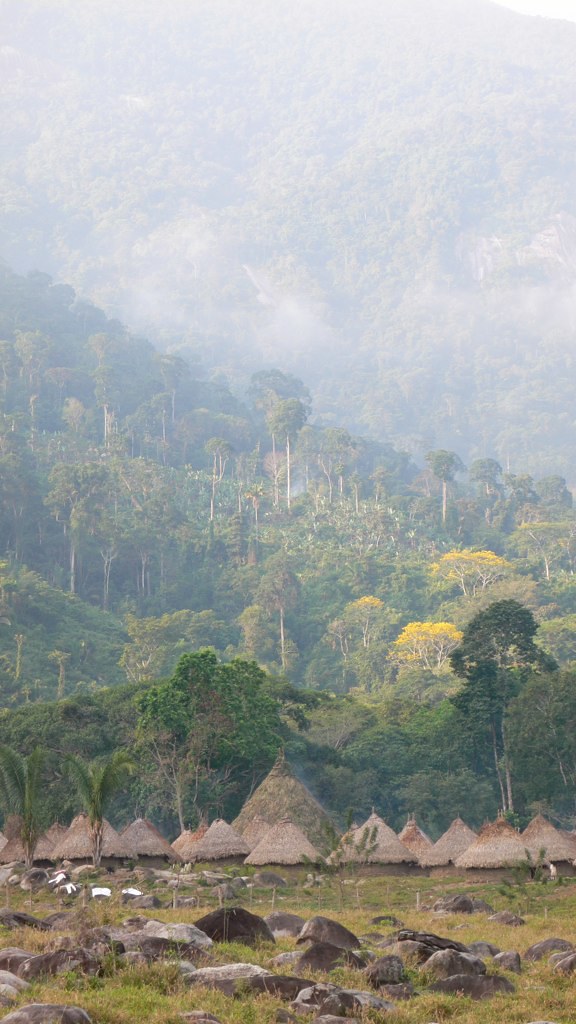
When 3 years ago I wrote a post about the Kogi -possibly the last functioning pre colombian civilization in South America- I never dreamed that I would end up meeting them.

In my post I talked about a documentary called From the Heart Of The World: The Elder Brother´s Warning wich told of how the Kogi had broken a 500 year long silence to send a message to the world.  It was broadcast by BBC 20 years ago, caused quite a stir, and had since become rather difficult to find.  After much searching a I found that a copy of the DVD could be had by making a donation to The Tairona Heritage Trust, the NGO that Alan Ereira, the film´s director, founded in order to help the Kogi regain their land.

One year after receiving a copy of the doc a newsletter from the NGO arrived in my mailbox.  It said that the NGO had recently provided funds to buy back a large piece of Kogi land that had been taken up by coca farmers.  Ereira had been invited to a meeting of Kogi Mamas where he was told that the first film didn´t have the desired effect (to get us to stop destryoing the earth) It was time to make a second film.

Ereira had began preproduction of a film that would, in fact, be conceived by the Kogi an co-created with them.  They were looking for a person to prepare the ground in Colombia, and act as liason between the production company in London, and Gonvindua Tayrona, the organization that represents all indigenous groups in the Sierra Nevada de Santa Marta.  I felt I´d been waiting for a job like this my whole life!  I spent weeks writing the presentation letter.  One month later I had the job, and we took a huge leap; me and my wife quit our jobs, we closed the house, and we moved, with our one year old daughter, to Colombia, to work on a project that was a dream in itself.

That film is called Aluna, and will be finished soon.  Please look at their official site and facebook page.

I will soon write a proper post about that experience which affected both me and wife quite deeply.  The Sierra Nevada de Santa Marta is probably the most amazing place I have ever visited.

We had to cut our experience in Colombia short.  After 10 years pushing -together with my filmmaker partners Mark Ellam and Robin McKenna-  our ayahuasca documentary was finally funded.

With a lot of sadness, but also with a lot of anticipation, we left Santa Marta, and moved the whole family again, to Tarapoto, in the Peruvian Amazon....


(...to be continued in next post)


TEXTO EN ESPAÑOL

Hace más de dos años que no escribo en este blog, pido disculpas, la razón a sido que han pasado muchísimas cosas desde entonces...

Cuando hace 3 años escribí un post sobre los Kogi nunca imaginé que acabaría conociéndolos.  En mi post hablaba de From the Heart of the World: The Elder Brother´s Warning, un documental que había emitido la BBC hace 20 años, y del que era muy difícil obtener copias.  La película era sobre los Kogi, posiblemente la última gran civilización precolombina que sobrevive hasta nuestro días.  En aquellos días la única forma de obtener copias del documental era haciendo una donación al Tairona Heritage Trust, una ONG regentada por Alan Ereira, director del documental.

Así que hice la donación, y recibí el DVD de la película, que me dejó muy impactado.  Algún tiempo después me llegó por email un newsletter de la ONG.   Decía que la organización había proveído recientemente una serie de fondos para que los Kogi pudieran volver a comprar tierras que les habían sido usurpadas. Ereira había sido invitado a una reunión de Mamas Kogi donde le habían pedido que hiciera una nueva película.

Esta segunda película sería concebida y co-creada con los propios Kogis.  Había comenzado la preproducción y estaban buscando una persona que -desde Colombia- prepara el terreno para el rodaje, actuando de coordinador de la comunicación entre la productora en Londres, y Gonavindua Tairona, la organización que representa a todos los grupos indígenas de la Sierra Nevada de Santa Marta.   Fue como si llevara toda la vida esperando este trabajo.  Pasé semanas enteras escribiendo la carta de presentación.   Un mes después el trabajo era mío, y dimos un gran salto, mi mujer y yo dejamos todo en Madrid, trabajo y casa, y nos mudamos, con nuestra hija de un año, a vivir a Colombia, para trabajar en un proyecto que era un sueño en si mismo, y que pronto estará acabado, ver la página oficial y el grupo de facbeoook.

Más adelante escribiré un post sobre aquella experiencia, que nos dejó una marca muy honda tanto en mi como en mi mujer.

Tuvimos que cortar nuestra estancia corta porque después de 10 años empujando mi gran proyecto personal (junto a Mark Ellam y Robin McKenna) -un documental sobre la ayahuasca-  recibió por fin financiación y se iba a convertir a realidad.  Con mucha pena pero también mucha anticipación dejamos Santa Marta y me mudé con toda la familia a Tarapoto, en la Amazonía Peruana

(...continuará en el próximo post)


Sunday, 12 April 2009

Writers and Ayahuasca 1: William Burroughs

In the last post I wrote about what might have been the first Ayahuasca documentary of all times. A recently unearthed rarity, narrated by none other than William Burroughs. Searching for more info on the elusive film led me by Google serendipity to Peruvian author Carlos Calderón Fajardo, who wrote a book about Borroughs second visit to Perú in 1993. Burroughs first visit, in 1953, was looking for ayahuasca, and turned into the famous Yaje Letters (newly edited and much expanded here). Burroughs had launched into his search for Yage ("the ultimate fix") after a hasty escape from Mexico where he had been sentenced for the bizarre shooting of his wife.


The Yage Letters is probably the all-time best-known literary account of Ayahuasca. The South America Burroughs describes is a corrupt, violent place, full of poverty and misery, and although all of those things were true (and some are still true to this date) one feels Burroughs' tastes for the seedy underground of drug and juvenile delinquents kept him from ever seeing a broader picture.


Re-reading The Yage Letters I felt as if Burroughs never really met anybody beyond the foreigners (he despised) and his casual sexual encounters with young men (that kept on robbing him) It struck me that he never seemed to experience what is wonderful not just about Yaje, but also about South America.

"When I started looking for Yage I was thinking along the line the medicine men have secrets the whites don´t know about. Most of these secrets turn out to be a con the Brujo puts down on the public so he can preserve a semblance of monopoly and everybody won't start brewing up the same mess in his own pot. Every Indian and most whites in the Amazon region from Colombia to Bolivia and on out to the Atlantic knows the Yage vine. The Brujos say they are the only ones competent to prepare it, two other secret plants must be cooked in the mixture, the Brujo has to croon over it and spit in it and shake a whisk broom over, otherwise the Yage is nowhere. And if a woman catches even a glimpse of these proceedings the Yage curdles on the spot and turns poison[ous]
The fact is Yage is Yage and anyone can prepare it in an hour or he has enough of the Yage vine. [...] The final result is 2 ounces more or less of black oily liquid. That is a dangerously strong dose — half the lethal dose — but it is standard in that area and it would not occur to them to take less or to take amount slowly. Indians are like that. They have a set way of doing things which they consider of its nature immutable."


It doesn´t occur the Burroughs that many people, knowing how to prepare ayahuasca, could choose not to do it by themselves, but do it instead under the care of a professional...

The first time Burroughs drinks he has a horrible time, distressed, he runs out of the maloca to throw up, he refuses the help of the curandero when it´s offered, and instead, he gulps down 5 Nenbutals to come down (these were the famous sleeping pills that Marylin Monroe used to kill herself.) After that Burroughs splits up from Schultes expedition, cooks his own batch of Ayahuasca and continues to drink by himself, as by now he believes that "the most inveterate drunk, liar and loafer of the village is invariably the medicine man"

Re-reading the Yage Letters I was constantly struck by the idea that Burroughs just didn´t get it, didn´t get South America, didn´t get Yage, didn´t get curanderismo. It´s as if he missed an entire set of experiences that will be familiar to most people who have spent some time in the Amazon drinking ayahuasca. I´m talking about simple things, such as experiencing the hospitality of strangers that turn into friends, and spending lazy evenings with them and their families... Nothing fancy or exotic, just basic human relations, which -in my own experience- can be one of the most rewarding things about traveling trough South America.

What Burroughs got out of Yage, many agree, was the basis of the "composite city" and the nightmarish worlds he'd later describe in the Naked Lunch.


Burroughs and Gisnberg

7 years later poet Allen Ginsberg followed Burroughs footsteps in search of Yage. He traveled to Pucallpa, where he describes an experience that seems much more familiar to modern Ayahuasca drinkers. He drinks in group, where -in spite of having a hard time- he feels well taken care of.

"Realization (over again) that the world is so illusory that what can be communicated, said, writ, in terms of human consciousness bears no relation to the Great Being who is complete in Itself and so perfect that no complaint need be made [.....] God cannot favor us over the mosquitoes without murdering & starving mosquitoes - So he lets us fight it out outside himself in chaos of Illusion, always retaining the Final Great Black Hole of Love to which we can return when we have been defeated or become tired of being separate individuals in creations [....]
Had laid out for long time [....] & Ramon had got up & told me to wrap myself in his mantle to protect form mosquitoes. A very kind gesture, I felt he realized I too had climbed up thu the Nose of God into Being the Same as Ramon - that we were all one, and this was a kindly gesture (wrought from afar by god) to protect me in my as yet delicate individuality - Later I went in the house, where they were (4 of them having drunk) sensing a great feeling of communal fraternity & sharing of realization of Infinite Intimacy - one old fellow on a bench, an albañil, moved over & motioned me welcome to to join him next to him to sit down. I saw that in Pucallpa they had their own secret transcendental nosy society, underneath very humane, in huts"


City Lights published The Yage Letters In 1963 (as well as Miserable Miracle, -what a title!- about Heri Michaux Peyote experiences.) That same year (1963) the Merry Pranksters embarked of the famous bus tour. Up to that point the main book about entheogens had been The Doors of Peception by Aldous Huxley about his mescaline experiences.

And whereas Wasson 1957 Life article about magic mushrooms sent seekers by the hundreds to the Oaxaca mountains, and Castaneda's 1972 books sent waves of hippies to the Yaqui and then (disappointed at the lack of entheogens) to the Huicholes. It seems like the number of anglo seekers who decided to search for Yage during the 60's/70's is so small as to be negligible (either that or they left almost no literature). My theory is that Burroughs' less-than-appealing tale overshadowed Ginsberg´s perhaps more "standard" account. Many people in the 60´s had heard of Ayahuasca (or Yage) but thanks to Burroughs they never felt like seeking it out.

And who knows, seeing how things played out in Huatla for María Sabina and her family, maybe it was better that way?


UPDATE:  here is the poem Ayahuasca by Ginsberg (1960) via turfing


AYAHUASCA
by Allen Ginsberg
in my hotel room overlooking Desamparados’ Clanging Clock,
with the french balcony doors closed, and luminescent fixture out
“my room took on a near eastern aspect” that is I was reminded of Burroughs
with heart beating—and the blue wall of Polynesian Whorehouse, and
mirror framed in black as if in Black Bamboo-and wooden slated floor
and I in my bed, waiting, and slowly drifting away
but still thinking in my body till my body turned to passive wood
and my soul rocked back & forth preparing to slide out on eternal journey
backwards from my head in the dark
An hour, realizing the possible change in consciousness
that the Soul is independent of the body and its death
and that the Soul is not Me, it is the wholly other “whisper of consciousness”
from Above, Beyond, Afuera—
till I realize it existed in all its splendor in the Ideal or Imaginary
Toward which the me will travel when the body goes to the sands of Chancay
And at last, lying in bed covered my body with a splendid robe of
indian manycolors wool,
I gazed up at the grey gate of Heaven with a foreign eye
and yelled in my mind “Open up, for I am the Prince of eternity
come back to myself after a long journey in chaos,
open the Door of Heaven, My Soul, for I have come back to claim
my Ancient House
Let the Servants come forth to Welcome me and let Silent Harp make music
and bring my apparel of Rainbow and Star show me my shoes of Light and
my Pants of the Universe
Spread forth my meal of myriad lives, My Soul, and Show up thy
Face of Welcome
For I am the one who has dwelled in the secret Temple before,
and I have been man too long
And now I want to Hear Music of Joy beyond Death,
and now I am be who has waited to Welcome myself back Home
The great stranger is Home in his House of Joy.”
or words or thoughts or sensations & images to that effect.
Thus for an instant the Sensation of this Eternal House passed thru my hair
tho I couldn’t liberate my body from the bed to float away—
tho did glimpse the foot of the thought of the gate of Heaven—
Then opened my eyes and Saw the blast of light of the real universe
when I opened the window and looked at the clock on the R R Station
with its halfnaked man & woman with clubs, creators of time and chaos,
and down on the street where pastry venders sold their poor sugar
symbolic of Eternity, to Passerby-and great fat clanking beast of Trolley
with its dumb animal look and croaking screech on the tracks
Powered by electric life,, turned a corner of the Presidential Palace
where Bolivar 200 years ago in time planted a secret everlasting Fig-tree
and a fog from another life crept thru its own dimension
Past the cornice of the hotel and travelled downward in the street
To seek the river-had a bridge with little humans crossing, faraway
—and up in the hills the silver gleam of sunlight on the horizon thru thick fog
—and the Cerro San Christobal—with a cross atop and Casbah of poor
consciousness ratted on its hip—
and overall the vast blue flash & blast of open space
the Sky of Time, empty as a big blue dream
and as everlasting as the many eyes that lived to see it
Time is the God, is the Face of the God,
As in the monstrous image of the Ramondi Chavin Sculptured Stone Monument
A cat head many eyed sharp toothed god face long as Time,
with different eyes some upside down and 16 sets of faces
all have fangs—the structure of one consciousness
that waits upstairs to Devour man and all his universes
—turn the picture upside down—the top eyes see more than the human bottom rows
Indifferent, dopey, smiling, horrible, with Snakes & fangs—
The huge gentle creature of the Cosmic joke
that takes whatever form it can to Signify that it is the one that has come to its Home
where all are invited to Enter in Secret eternally
After they have been killed by the illusion of Impossible Death.
Lima, Peru
May 1960

UPDATE 2: A great summary of Burroughs in Perú (in Spanish) here

Sunday, 25 January 2009

Huni Kuin, Ayahuasca & Santo Daime

(texto en español debajo del video)

In my very first post in this blog I talked about the great distance that separates Brazilian drinkers from the vegetalista and curandero traditions at the origin their of ayahuasca use. Generally speaking vegetalistas in Perú, Ecuador, Colombia, etc know nothing about the ayahuasca churches, and vice versa. This seems to be slowly changing, starting in the very area where the two traditions began to separate, in Acre, where the Santo Daime was founded.

Here´s the information I've picked here and there:

1 - A quote from a recent discussion in a mailing list I suscribe to (pesquisadores da ayahuasca)
For your information, today there is, al least, one village where pajé Ninawá --in addition to his traditional shamanic practice (pajelanças)--- leads travalhos in a salon (Daime works) with farda (Daime uniform) and guitar, singuing hymms in portuguese and in his language. This village is in Rio Jordao (Huni Kuin reserve)


2 - This blog, tells of the visits of a Huni Kuin (the tribe is also known as Kaxinawa, but for them this is a derrogatory term) Pajé to several Santo Daime centers, including Alto Santo, as well as the UDV. Courtesy of Eduardo Bayer.

3 - Here´s a book about a bilingual school among the Huni Kuin in the river Humaitá. In the introduction Bia Labate says
"[the book] also talks about the entrance of the Santo Daime in the village, in a "re-indigenised" version (BTW as many might know, its been some years since the Huni Kuin began to leave their villages to promote ayahuasca sessions in large urban centers such as Jio de Janeiro and Sao Paulo -- This expansion is altering a bit the simbolic cartography of the brazilian ayahuasca field as well as its notions of "authenticity" and "tradition" since the Huni Kuin reivindicate the ancestral origin of their ayahuasca use to those urban audiences"


4 - Here's the blog of another Huni Kuin pajé, living in Sao Paulo, on the sidebar you cand find recordings of quite interesting Huni Kuin ayahuasca songs.

5 - Here´s a part of a documentary about Huni Kuin ayahuasca songs (Fantastics stuff! Shot by the NGO Video nas Aldeias. You can see the the whole documentary or download a high quality copy here). On this clip they are gathering "monkey ayahuasca" "first it brings a yellow light"


6 - In this school they are relearning the tradions that they had to forget as seringueiros. The teacher says "you´ve learned to read, now you must learn to dance"


(texto español)

El primer vídeo es parte de un documental sobre las canciones de ayahuasca de los Huni Kuin (se puede ver entero, o descargar, aqui). El segundo vídeo es de un escuela Huni Kuin donde enseñan "lo que tuvieron que olvidar al trabajar como seringueiros." El profesor dice "ya has aprendido a leer, ahora debes aprender a bailar"

En el mi primer post en este blog (en inglés) hablaba de la distancia que separa los bebedores de ayahuasca Brasileños de las tradiciones vegetalista y curanderil en el origen de uso de la ayahuasca. En general los vegetalistas en Perú, Ecuador, Colombia, etc. no saben nada de las iglesias de la ayahuasca, y vice versa. Parece esto va cambiando poco a poco, y está comenzado en el estado de Acre (brazil), el mismo lugar donde las dos tradiciones comenzaron a separarse.

Un resumen de la información que he ido encontrando:

1 - Una cita de una lista de correo (pesquisadores da ayahuasca) en la que participo
"Para tu información, hoy existe por lo menos una aldea donde un pajé dirige -además de sus practicas shamanicas tradicionales- trabajos dentro de una sala (estilo Santo Daime), con farda (uniforme del Daime) y guitarra, cantando himnos en portugués y en su lengua. Esta aldea se encuentra en Rio Jordao" (reserva natural Kaxianawa)


2 - Este blog, describe las visitas de un pajé (chamán) Huni Kuin (el termino Kaxinawa se considera derrogatorio) a varios centros del Santo Daime, incluido Alto Santo, así com al UDV. Via Eduardo Bayer.

3 - Aquí un libro sobre los Huni Kuin del rio Humaitá. En la introducción Bia Labate dice:
"[el libro] también habla del tema de la ayahuasca, narrando un poco la entrada del Santo Daime, en un a versión "reindigenizada" (Por cierto, hace algunos años que los indios Huin Kuin comenzaron a salir de sus aldeas para promover sesiones de ayahuasca en grandes centros urbano como Rio de Janeiro y Sao Paulo -- esta expansión está alterando un poco la cartografía simbólica del campo ayahuasquero brasileño, y sus nociones de "autenticidad" y "tradición", ya que los Huni Kuin reivindican junto a este público urbano la ancestralidad de su consumo de ayahuasca.)"


4 - Aquí está el blog de otro pajé Huni Kuin, que vive en Sao Paulo. En el lateral de la página hay algunas grabaciones muy interesantes de cantos de ayahuasca Huni Kuin.

Saturday, 6 December 2008

Ayahuasca and Cumbia Amazónica

Perhaps one of the most peculiar Ayahuasca songs is Vacilando con Ayahuasca, by Peruvian Cumbia pioneers Juaneco y su Combo. The Peruvian cumbia sound sprung as a distinct style in the early 60´s, when Henry (Los Destellos) Delgado took the accordion -which was the staple sound of the original Colombian Cumbia- and substituted it with the electric guitar, creating a sound that, by our standards, is reminiscing of surf music.

Soon there were regional variations of the Peruvian sound. Juaneco y Combo, together with the fantastic Los Mirlos were the major originators of the Cumbia Amazónica, also known as Cumbia de Oriente or Poder Verde, a style which appeared in the 70´s together with the first oil boom of the Peruvian Amazon. It was characterized by the incorporation of traditional dresses, as well as mythical characters and figures of amazonian lore.

Juaneco y su Combo was founded in Pucallpa in the 60s by Juan Wong Paredes. Their first LP El Gran Cacique (1970), contains the classic Vacilando con ayahuasca. A very groovy tune that would not be out of place in a Tarantino movie.... though to this day I fail to see what the sensual female moaning has to do with Ayahuasca.


juaneco y su combo - vacilando con ayahuasca by INFOPESA

Now for something truly bizarre here´s a recent video of the song. Although the original was recorded in the 70s, the band is still going strong even after 40 years and the death of some of its original members. Check out the Shipibo shirts. That´s some amazonian funkiness right there.


Yikes! I just never thought I'd see curanderos and go-go dancers in the same shot!
Via Grandes de la cumbia peruana

If you'd like to hear more of that Peruvian cumbia sound Barbes Records out of Brooklyn is putting out compilations re-issuing the classics.

Saturday, 15 November 2008

Kogis, documentaries, and voluntary isolation

Early this year, while going through a Ralph Metzner Interview we recorded in 2003 my curiosity was piqued by his mention of the documentary: "From the heart of world." In Google I found the documentary, about Colombia's Kogi Indians, had been shot in 1991, broadcast by the BBC, gone on to video(released in the US by the fantastic Mystic Fire Video) and gone on to become somewhat of a lost cult classic. Never reissued, the VHS used to fetch quite outrageous prices (used to be more than $100, lately around $39)

Since the doc seemed out of my reach. I bought the book instead (reviews here, but buy it here and give back to the Kogi)

I cannot recommend the book enough. Much is amazing about the Kogi: The fact that they have managed to keep their culture alive by a practical form of voluntary isolation... while living right next one of the first places where Europeans disembarked into the Americas. The role that the "Mamas" (priest/leader/healer) play in their culture, not to mention the extreme training to become one, which includes keeping future Mamas living inside a cave, in perpetual darkness, throughout much of their childhood. During their training years they´ll never see the light of the day, while being taught every night, "concentration". Can you imagine what the world must look like after 10 years of darkness. Nothing short astounding, and that is precisely what they are being taught.

"...told me that Mamas are educated from infancy in the dark, and only allowed into the light when their education is complete, after two periods of nine years. Nine is the number required for completeness, as a foetus spends nine lunar months in the womb, and there are nine worlds. There are also characters called moros, he said, whose education continues for two more periods of nine years. These I would never meet; they live high in the Sierra, and speak only with Mamas. These are the oracles who determine ultimate policy. These creatures are the ones who have seen the approach of the end of the world. I later discovered that moro is the word for any pupil studying to be a Mama. It does seem quite possible that some students are not released into the light until they are over thirty. . . . The Kogi are profoundly ascetic, and prepare themselves for important moments by fasting, meditation and sexual abstinence; contact with anyone who is still locked into the gross physical world can, they believe, render this preparation useless. Javier's moros would be in this heightened state all their lives, and it would therefore be impossible for me ever to set eyes on them, but he suggested that they would have their eyes on me" -- pp. 77-8


The book tells the story of how the Kogi decided to break their silence to issue one last warning to "the younger brother" (that's us) how Alan Ereira was chosen to deliver that message to the world. The message itself, one of upcoming ecological apocalypse brought by the warming of the earth is all the more spooky when taking in consideration no one had told the Kogis about global warming, they observed it. I was completely fascinated by the book, and so was my gf who got it after me.

this point I went on a quest to to find more about the Kogi. First I looked for Reichel-Dolmatoffs pioneer study on the Kogi. Now *that* was a difficult book to track, by pure chance I found out it had been republished by a small-print literary magazine in Spain a decade ago. I ended up finding a copy in an appointment-only second-hand store in Madrid. The book added a whole new layer to my understanding of the Kogi, and also put a lot of things in perspective, there are many tribes who feel they live literally, at the center of creation, and see themselves holders of the world order (that old ethnocentrism), also the whole warming up and drying of the earth message that the Kogi delivered 20 years ago, and that seems so prophetic nowadays, can be as related to local weather changes caused by erosion in the Sierra de Santa Marta (already at work in the 60s) as to global circumstances. None of this makes the Kogi less extraordinary.

Then I found out a copy of the documentary could be had by donating more than $50 to The Tairona Heritage Trust, an NGO set up by the film director, Aran Ereira. I donated, and that´s how I got to see the film, which is well worth it.... and so is the cause the it supports.

Last week I received a letter form the foundation describing their purchase of large tracks of land to create an "environmental and cultural cordon" of "border towns" to literally manage the encounter between the outside world and the restricted zone they hope to have declared as Kasankwa (sacred territory) by the UNESCO.

Do donate
.

Meanwhile, in a recent talk at TED, anthropologist superstar Wade Davis tells of his encounter with the Elder Borthers, and -guess what- he claims the Mama's do not spend childhoold in the dark, but isolated, working in Aluna. However, Davis wasn´t with teh Kogs but with teh Arhuacos. Here´s the video starts at 10:30. He also spoke about the Kogis in 2003 here starts at around minute 8 but the whole talk really is must.


In the last year, the wonderful Free University in the Internet has posted a full copy of the doc (along with many other wonderful things)


And the blog socially responsible films.. has followed suit which doesn´t mean you shouldn´t contribute to the cause if you can (and you can).

In spite for the obvious call to being left alone that the Kogis made at the end of the doc the story has continued, "L. Condor" a former Ford employee is putting together a documentary with a *second* older brother´s message, the prophecy of the eagle and the condor, and apparently some mamas made it to Georgetown University (!) Here's an Australian homeopath's strange story .. and a healer named Sequoya Trueblood claims to have been telepathically contacted by the Kogi

(sight)

In a more serious and worthwhile note, the French geographer Eric Julien has shot 2 more documentaries and written two books about the Kogi, has also started an NGO with the purpose of purchasing land for the Kogi


Indeed, in spite of that the first documentary might have implied the Kogi are not completely isolated, they regularly engage in commerce and interchange, have missionaries and nuns living with them etc. In Colombia they seem to be well known. Here's a TV news clip form a recent ceremony by Kogi Mamas to cleanse the mountains of the toxicity left by FARC guerilla land mines. It was attended by Colombia´s vice-president, and Carlos Vives on of the country´s biggest pop stars. The news anchor even uses the term "younger brothers" without feeling the need to explain its meaning. Indeed "La muralla" a Kogi settlement for the benefit of tourism is in the process of being built (newsclip in Spanish). Seems like the older bother´s message has penetrated the collective unconscious (or pop culture)


It couln´t be any other way. Everything about the Kogis, from their ecological message, their poetic rejection of industrial culture, their matriarchal mythology (a goddess of creation, at last!) their voluntary isolation, etc. position them like no others to become, quite against their will, the poster tribe of all things New Age. They don't even posses all those other qualities (like penchant of warfare) that make other indigenous cultures so unconformable to westerners. They are an indigenous culture like we would like all indigenous cultures to be, pacific, spiritual, and ecological.

My recomendation? Read Ereira's book.

Sunday, 26 October 2008

Ayahuasca: Shapeshifting or egotripping?

I posted a new video from a recent conference in Madrid organized by Asociación Eleusis of which I am member.

The speaker is Josep María Fericgla, a Catalonian author, anthropologist and (almost) psychologist. His work falls in the area between those two fields, he calls it ethnopsychology or cognitive anthropology. Though less known in the English speaking world Fericgla is quite an institution in Spain. He did fieldwork with Shuar shamans in Ecuador, and wrote "The dream hunters" as well as "Al trasluz de la Ayahuasca" a multidisciplinary study on Ayahuasca. On his return to Spain he began to work on finding ways to adapt what he had learned about modified states of conscious into a western context. He founded the Society of Applied Ethnopsychology where he runs a number of seminars and workshops, as well as 2 to 4 year course as a "Director-Guía de Experiencias Estructurantes Activadoras" something like: director-guide of structural activating experiences.. hard to translate. As can be seen by the language Fericgla´s tries to stay as much as possible on the scientific, non-fluffy, non new-age, approach to entheogens and the therapeutic use of altered states of consciousness.

I interviewed him in 2003, and recently bough his book "Los chamanismos a revisión" (shamanisms under revision) where he systematically disassembles most of the romantic western ideals around shamanisms (in plural, he says there is no such thing as shamanism, there are only shamanisms) Unfortunately the book hasn´t been translated to English, but I plan to post a long review of it soon, as it brings up some very interesting ideas.

Anyway, during his talk he mentioned forms of regressive and narcissistic tendencies among entheogen consumers. I was curious about this. I think his answer is very interesting.

His view on shapeshifting is, to say the least, quite unique. But he should know what he´s talking about, at this point he has more than a decade of continuous experience on the therapeutic use of altered states of consciousness.


There´s a hand-me-down idea often repeated among what McKenna called "psychedelic people" (i'd be one of them) the idea says something like: "entheogens are ego dissolvers." Though that can be sometimes true, the ego is strong, and soon finds ways around it. Hence "many people take ayahuasca and are still full of shit." -As Evgenia succinctly said in the YouTube comments.


PD I have been wondering lately how come I only seem to post negative stuff: ego tripping this, appropriation of indigenous knowledge that, fake shamans etc. Don´t I have anything positive to say about Ayahuasca?

I certainly do.

There is just so much of that already online (and in my tapes) that I figured it'd be a better contribution to bring new ideas to the debate, rather than to rehash the same old ones...

Update: A video of the whole conference (in Spanish) can be found here

Sunday, 6 January 2008

Ayahuasca tourism vs. traditional uses, and an online collaborative documentary

When I was invited last year to give a talk a the 3rd Amazonian Shamanism Conference I had no idea what I'd talk about. I had been invited because Jimmy Weiskopf recommened me to Alan Shoemaker, and he had liked some of the chacra diaries so I figured I'd talk a bit about amazonian dietas, a bit about the documentary project, and I'd use the chance to see if I could find people who'd like to help in a collaborative online documentary we've been thinking about for some time. Kind of like Echo chamber project, but different.

The project

The problem we have is that: 1- We have picked a huge topic (which keeps on growing! entheogens, traditional medicine, the link between health and spirituality, the colonization of the Americas and the new cultures that resulted form it, etc etc) and 2- The idea of trying to compress all that material into a standard-size 45-minute documentary, full of soundbite-size statements runs a real danger of over-simplification. You can't explain uses/misuses/abuses of ayahuasca, mention the churches, delve a bit into traditional medicine, what is happening to curanderos and what that says about western culture (and the failings of scientific medicine!) biopiracy, cultural appropriation... and of course reflect a bit on the part of us that actually gets touched by ayahuasca, and what that says about what it means to be human.

See? It doesn't fit in 1 hour, not without making a joke of everything.

So we started playing with a different idea, a sort of gigantic online video archive where we would dump all the tapes, and people could consult at their own pace, without middle men.

But how would people navigate around hours of video?

We needed: an indexing system, a tagging system, and a navigational interface.

Basically all the interviews would be transcribed (word by word), and all videos indexed/tagged (by topic). It would be just like the index at the back of a book, where you can find where certain topics are mentioned and jump to that page. I imagined an interactive index of all the videos, so that people interested on a certain topic could find all the interviews/parts where that topic was mentioned and go there. The interface could even queue the video segments for viewing one after another.

Once you have that built, you have a system to generate movies automatically. You are doing what an editor does with the raw video material (well, almost), but dynamically, on-the-fly. Any path can be transversed though the set of raw materials. So why not predefine a few? We could make a couple of documentaries (the one hour version, the five hour version, etc) and leave them as preset "paths" through the archive, also as starting points. Did you like what someone said during the doc? Would you like to hear the rest? You could jump out of the path, see as much as you wanted of the original interview, and then return. Would you like to see who else talked about that topic just mentioned? You could, etc.


That is more or less the new plan, it's a long project, but I am in no hurry. I see this pretty much as a life-long project. And I believe someone will program a platform that does exactly this sooner or later. It doesn't seem too complicated, basically it's a database that has tape numbers, and uses timecodes to mark in and out for transcribed text (word by word, very good for subtitles later) and in and out time codes for topic and/or tags. It should be fairly easy to give those time codes to a player (quicktime etc) and it would queue them for you. If no one gets around to do it I guess we will.

Sounds interesting? I am looking for volunteer programmers, designers, and very importantly transcribers. I need people to help me put into writing the dozens of hours of interviews I have with some of the most interesting people in the ayahuasca world. Including Benny Shanon, Johnatan Ott, Jacques Mabit, Luis Eduardo Luna, Ralph Metzner, Richard Yensen, Antonio Escohotado, Josep Maria Fericgla, dozens of curanderos, mestres and members of the 3 main Brazilian Ayahuasca churches, psychologists who use the brew to get people off drugs, former drug addicts, and a host of people from all walks of life whose lives have been touched by their encounter ayahuasca, plus rituals, masses, preparations, healing sessions, seminars, detox centers... the list goes on and on.

If you are interested in ayahuasca and you can type fast and you will probably enjoy the work, the interviews are really well worth it.


Back to the talk

That was more on less on my mind for the talk. At the Conference I met some very good people, but in Iquitos there is also a side of Ayahuasca that I actively try to avoid: Cunning locals looking for a quick buck (chamán + charlatán = charlamán) and/or sincere but (in my opinion) misguided westerners of new age-ish leanings.

Now, if you are interested entheogens chances are you too have what others would describe as new age-ish leanings, I certainly do, but some people are just more new age than others, I guess, and some people are just too new age for me. Which is normal, everybody knows somebody who they think "goes too far" into whatever. In life you'll always meet people you click with and people you can´t get along with. Attitudes you approve and attitudes you disapprove. It is perfectly normal (actually it is unavoidable) it happens in any field of human activity. There is no way out of it.

...And certainly in this world everybody should be able to pursue their own individual bliss as they see fit.

But that week in Iquitos I saw people that in my opinion were not properly prepared, make a farce, a theater play, out of something I respect and love very much, the work and practices of Amazonian curanderismo. All in order to feel better about themselves in front of people who didn't know any better (and get some of their money.) It wasn't necessarily in the conference, there was plenty of worthwhile people there, but some of it was around it, and that mix of the good and the bad is certainly an integral part of Iquitos ayahuasca scene.

So when the time came for my talk I though I'd try to clarify a few misconceptions that seemed rampant in the western-ayahuasca-seekers world (of which I am undeniably part of) Not to tell people what to think, but just communicate a few facts I found useful when facing "amazonian shamanism". Basically I wanted to:

1-Talk about how our western interest (read money) in shamanism is changing it from what it was, to what we would like to be.

2-Put shamans/curanderos first in their proper context:
a) As traditional doctors who practice a form of *medicine*, neither saints (they can be very flawed) nor proper gurus or spiritual guides (that is a different job, from a different culture) and
b) as *professionals* of their field, the result of years of training, not a few weeks or month long "courses" (This weekend-course format is perhaps the most defining factor of all things new age: they all seem to take place in the form of "courses")

3-Ask for some help with the doc project.

Below is a short reduction of the talk


the full talk can be seen here.

You be the judge as to how well I managed to get points 1 and 2 across. As to point 3 I was almost a complete failure. Only Susan offered help (thanks Susan!) She's helped me quite a bit already and I don't like to bother volunteers in excess. So, if you'd like to help with the project write to


If you wouldn't like to help but are interested on the topic of the appropriation of indigenous knowledge I recommend

Plastic Shamans and Astroturf Sun Dances

Selling Native Spirituality

We do not have shamans

Declaration of War Against Exploiters of Lakota Spirituality

Newagefrauds has some updated forums full of denunciations, they take a very hard line and their positions are controversial even among some Native Americans. Indeed the whole topic is full of heated arguments Here used to be another popular forum, but the person who was running got tired of all the threats she received and decided to shut it down. Some of her parting words were:

"Let me make my position clear - I am not against non-Indians participating in ceremony. I know that puts me at odds with a probably rather large portion of the Native community. But if you are going to participate - do it in a safe and respectful manner. Please - wait until you've been invited by a member from a legitimate community. Don't pay, and look out for a few simple things that will let you know if you supposed Medicine Man/Woman is genuine or not. Do they speak the language of the people they claim to be from? Do they do these ceremonies back home for the people they claim to be from? Do they ask for money upfront - either as a "love offering" or any other "suggested donation."


I guess she meant something like this crap $90 down and $5 a month will get you adopted as a "Native American Medicine Man or Woman"

Utterly shameless (or shameon)