Wednesday, 30 May 2012

funded, again


Our second crowdfunding campaign in indiegogo was a success!

The reality of creating a documentary that looks feels and sounds like this has meant a tremendous amount of love, work and effort in the service of something we believe to be overwhelmingly important - not less than a change in the conscious approach to medicine.
In a sea filled with sometime chaotic messages we want to create something that you can give to anyone and say: Watch this, you will understand what ayahuasca is about. To valorize the use of the medicine, to bring traditional Amazon practices out of the margins and present them to the world defended in a cloak of respectability supported by science.
In the past 6 months, almost 850 people have pledged nearly $64000 to help us accomplish this dream.

THANK YOU

Tuesday, 20 December 2011

Tuesday, 6 December 2011

We´re back 2: Takiwasi - Estamos de vuelta 2: Takiwasi

(Texto en español después del vídeo)

ENGLISH TEXT
 ...Continued from we´re back 1

We had to cut our experience in Colombia short because exciting news had arrived:  After 10 years of pushing -together with partners Mark and Robin- our ayahuasca documentary had been picked up by the Canadian Broadcasting Corporation (CBC), to be broadcast in their most prestigious science show:  The Nature of Things.

Being a two thirds Canadian team we had thought of The Nature of Things as the perfect home for our film from day one.  With more more that 50 years on air it is the longest-running documentary program in the history of TV.   In Canada the show, and its host David Suzuki are national institutions on the fields of nature, environment, and technology.   We were beyond excited to have them host our film.  We couldn´t think of a better home.

In our 10 years of research into ayahuasca we had visited everything from indigenous and mestizo shamans to western psychotherapists, and syncretic afro-christian churches.  The manifestations of ayahuasca across the Amazon are enormously rich and varied.  We had decided to focus the documentary on a much less frequent use of the ayahuasca:  The treatment of addiction. The reasons for this were twofold: First we could better show what ayahuasca can do to people by showing the dramatic process of change that the addicts undergo.  Secondly, we´d make a clear statement - the very same plants can be poisons or remedies, depending how they are used.


Our film follows the story of Dr. Gabor Maté, a writer and addiction expert who -frustrated with the low rates of success of conventional treatments- hears of a treatment center in Perú where they have been treating addictions using a combination of traditional amazonian medicine and western psychotherapy.   After a visit to Takiwasi, Dr. Maté decides to start an experimental program in Canada using ayahuasca to treat hard-core drug addicts.  The films follows the story Dr. Maté and his patients, and of Takiwasi´s founder -Dr. Jacques Mabit- and his patients, as well as of a team of researchers studying the effects of ayahuasca, and a group of indigenous shamans who are meeting to defend their medicine and traditions.

Mark´s McGiver broom camera contraption

The resulting shot looked very very good


So, while unit A followed the bulk of Dr.Mate´s story in Canada, I handled the South American end of the documentary.   I spent 5 months, together with cinematographer Gris Jordana, filming the patient´s life in Takiwasi.  The center opened their doors to us, and the patients gave their permission to let us film their everyday lives.

Group therapy at Takiwasi
We filmed every part of the process of patients in Takiwasi, from arrival to departure. We attended ayahuasca rituals, therapy sessions, work schedules, meals, siestas, their fights, realizations, and reconciliations.  I felt privileged to be able to witness Takiwasi´s work so closely.  Although their focus in on addiction, the main lines of their work with plants can be applied to just about anyone interested in "dealing with their issues".  A condition for our being allowed to get close to the patients was that we too participated of the Takiwasi plant treatment.  How could we properly film a process we didn't understand?  Both me a Gris were assigned a psychologist each, and put on Takiwasi´s program, including purgative plants, ayahuasca sessions, and a week long dieta.  In no small way, we became patients ourselves.  I will make a longer post soon about my experiences, but I will just say that those 5 months were some of the most difficult, wonderful, transformative times of my life.  Everyone hopes to work in something that will not just pay your way, but enrich your life.  I think for both me and Gris this became a job like no other.  By participating in this process, and by filming others doing, I learned so much, about myself, about ayahuasca, and about life, than it is hard for me to even remember what I was like before this experience.   I remain thankful to Jacques Mabit, and everyone at Takiwasi for how much they helped me, as a filmmaker, but specially as a human being.  And I am specially thankful to my wife an daughter, who followed me to the middle of the jungle, and patiently put up with all of it!

The shoot in Perú was followed by 2 trips to Colombia to film with the UMIYAC (Union de Médicos Indigenas Yageceros de la Amazonía Colombiana) a trip which deserves its own post, a meeting of traditional ayahuasca doctors from 9 different tribes, more than 30 ayahuasqueros of the highest degree drinking together.  I am certain there is nothing like it anywhere else in the world.


After the shooting ended I spent nearly a year and half, across several trips, in Canada, where the film was painstaninkly put together...

....to be continued but here is the trailer


Would you like to see the rest of the film? Please help us finish it


TEXTO EN ESPAÑOL

¿Quieres ver el resto de la película?  Por favor ayúdanos a terminarla!

...continua de Estamos de vuelta 1: Kogi

Tuvimos que cortar nuestra estancia en Colombia corta porque habían llegado buenas noticias: Después de 10 años empujando, junto a Mark Ellam y Robin McKenna, nuestro gran proyecto personal (y la razón de este blog) se iba a hacer realidad.  Nuestro documental sobre la ayahuasca recibió la financiación de la Canadian Broadcasting Corporation (CBC) que lo iba a emitir en The Nature of Things, su programa de ciencia más respetado.


Siendo un equipo dos terceras partes Canadiense, siempre habíamos visto The Nature of Things como un hogar perfecto para nuestra película.  Es el programa de documentales que más tiempo lleva en antena de la historia de TV 50 años ininterrumpidos!   En Canada el programa, y su presentador, el científico David Suzuki, son figuras de referencia y tremendamente respetadas en temas de ciencia y medio ambiente.

En los 10 años que llevamos investigando la ayahuasca hemos visitado desde curanderos indígenas y vegetalistas mestizos hasta psicoterapeutas occidentales, pasando por iglesias sincréticas afro-brasileñas.  Las manifestaciones de la ayahuasca lo largo y ancho de la Amazonía son tremendamente variadas.    Nosotros decidimos enfocar nuestro documental en un uso de la ayahuasca muy minoritario: El tratamiento de adicciones, por dos razones:  La primera es que el dramático proceso de cambio que experimentan los adictos era una buena manera de mostrar al mundo la forma en la que la Ayahuasca bien aplicada puede afectar a las personas.  En segundo lugar,  evidenciar a través de los adictos, que las mismas plantas pueden ser venenos o remedios, según la forma en que se utilicen.   Queríamos hacer una película que no solo rindiese homenaje a la riqueza del conocimiento indígena, si no que también mostrara un ejemplo de cómo éste conocimiento se puede llevar a la práctica por occidente, y los beneficios mutuos que estos intercambios pueden aportar (cuando son recíprocos!).

Dr Gabor Maté en Takiwasi
Dr Jaques Mabit
El documental sigue la historia del Dr Gabor Maté, un autor y experto en adicciones el cual, frustrado con la bajísima tasa de éxito de los tratamientos convencionales, oye hablar de un centro en Perú donde han estado tratando toxicomanía usando una combinación de medicina tradicional amazónica, y psicoterapia occidental.  Después de una visita a Takiwasi el Dr. Maté decide comenzar un programa experimental en Canada, para tratar adictos usando la ayahuasca como soporte.   La película sigue el proceso del Dr. Maté y sis pacientes, así como el Dr. Mabit, fundador de Takiwasi, y sus pacientes, así como un equipo de investigadores in Barcelona estudiando los efectos de la ayahuasca, y un grupo de chamanes indígenas, que se reúnen para defender su medicina y tradiciones.

Así que mientras la unidad A seguía en grueso de la historia del Dr. Maté en Canadá, yo me ocupé de toda la parte Latinoamericana del rodaje.   Pasé 5 meses junto a cinematografía Gris Jordana, grabando el proceso de los pacientes en Takiwasi.   El centro nos abrió sus puertas, y los pacientes nos dieron permiso para granar sus vidas.  Capturamos cada parte del proceso de los pacientes en Takiwasi.
Gris grabando la dieta
Atendimos llegadas, abandonos, rituales de ayahuasca, sesiones de psicoterapia, comidas, trabajos, peleas, reconciliaciones…  Me siento afortunado de poder haber sido testigo de privilegio del trabajo de Takiwasi.  Aunque el foco del centro son las adicciones los principios básicos de su programa de plantas se pueden aplicar al cualquier persona que tenga asuntos vitales pendientes.   Una de las condiciones para permitirnos acercarnos a los pacientes fue que participáramos del proceso terapéutico de Takiwasi.  No se puede hacer una película sobre algo que no se entiende, así que se nos asigno un psicólogo a cada uno, y se nos puso en el programa de plantas, incluyendo las famosas purgas, sesiones de ayahuasca, y una dieta de una semana de duración.   Compartimos el proceso con los pacientes, y en gran medida, nos convertimos en dos pacientes más.  Pronto haré un post más largo relatando mis experiencias, solo decir que ha sido uno de los periodos más maravillosos, duros, y transformadores de mi vida.  Creo todo el mundo espera poder trabajar en algo que no sólo le de para vivir, sino que tambien le enriquezca como persona.  Tanto para mi como para Gris este fue un trabajo distinto a cualquier otro.   Aprendí tanto de mi mismo, de la ayahuasca, y de la vida, en este proceso, así como grabando el proceso de otros, que es difícil para mi recordar cómo era antes de esta experiencia.  Quedo eternamente agradecido a J. Mabit, y a todos en Takiwasi, por todo lo que me han ayudado, profesionalmente, pero sobre todo como persona. Sobretodo les agradezco a mi mujer e hija la paciencia de haberme acompañado hasta la selva, y aguantado durante todo este proceso!

A los 5 meses en Takiwasi siguieron dos viajes a Colombia para grabar con la legendaria UMIYAC (Unión de Médicos Indígenas Yageceros de la Amazonía Colombiana) lo cual va a merecer su propio post, una unión de chamanes de 9 tribus! más de treinta ayahuasqueros de primer orden juntos en una maloca.  No existe nada igual en el mundo.

Cuando terminó la grabación pasamos casi un año y medio más repartido entre varios viajes, editando en Canadá...

...continuará pero por ahora aquí está el trailer


¿Quieres ver el resto?  Por favor ayudamos a terminar la película!


The Jungle Prescription - un álbum de fotos del rodaje en Flickr.

jungle riverupper amazonboiling potjacques over potPutumayojacques with pipe
Putumayojacques w pipe v2democracy nowneedlePutumayoGabor @ Onsite w Breanna
BreannaGabor Heading Into SenatePutumayotakiwasi entrancemedicine p1takiwasi back
medicine 2takiwasimedicine 3Gabor @ Takiwasia jungle spiritemek


Enhanced by Zemanta

Sunday, 4 December 2011

We´re back 1: Kogi - Estamos de vuelta 1: Kogi

ENGLISH TEXT  -  (Texto en español abajo)

It´s been more than 2 years since I posted anything on this blog.   My apologies, the reason is that my life took quite a crazy turn since...

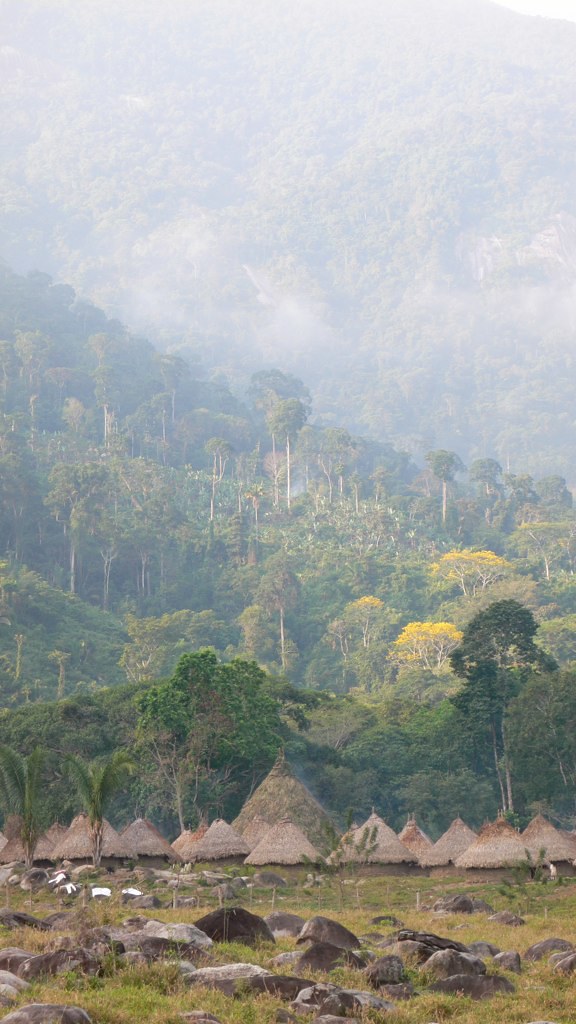
When 3 years ago I wrote a post about the Kogi -possibly the last functioning pre colombian civilization in South America- I never dreamed that I would end up meeting them.

In my post I talked about a documentary called From the Heart Of The World: The Elder Brother´s Warning wich told of how the Kogi had broken a 500 year long silence to send a message to the world.  It was broadcast by BBC 20 years ago, caused quite a stir, and had since become rather difficult to find.  After much searching a I found that a copy of the DVD could be had by making a donation to The Tairona Heritage Trust, the NGO that Alan Ereira, the film´s director, founded in order to help the Kogi regain their land.

One year after receiving a copy of the doc a newsletter from the NGO arrived in my mailbox.  It said that the NGO had recently provided funds to buy back a large piece of Kogi land that had been taken up by coca farmers.  Ereira had been invited to a meeting of Kogi Mamas where he was told that the first film didn´t have the desired effect (to get us to stop destryoing the earth) It was time to make a second film.

Ereira had began preproduction of a film that would, in fact, be conceived by the Kogi an co-created with them.  They were looking for a person to prepare the ground in Colombia, and act as liason between the production company in London, and Gonvindua Tayrona, the organization that represents all indigenous groups in the Sierra Nevada de Santa Marta.  I felt I´d been waiting for a job like this my whole life!  I spent weeks writing the presentation letter.  One month later I had the job, and we took a huge leap; me and my wife quit our jobs, we closed the house, and we moved, with our one year old daughter, to Colombia, to work on a project that was a dream in itself.

That film is called Aluna, and will be finished soon.  Please look at their official site and facebook page.

I will soon write a proper post about that experience which affected both me and wife quite deeply.  The Sierra Nevada de Santa Marta is probably the most amazing place I have ever visited.

We had to cut our experience in Colombia short.  After 10 years pushing -together with my filmmaker partners Mark Ellam and Robin McKenna-  our ayahuasca documentary was finally funded.

With a lot of sadness, but also with a lot of anticipation, we left Santa Marta, and moved the whole family again, to Tarapoto, in the Peruvian Amazon....


(...to be continued in next post)


TEXTO EN ESPAÑOL

Hace más de dos años que no escribo en este blog, pido disculpas, la razón a sido que han pasado muchísimas cosas desde entonces...

Cuando hace 3 años escribí un post sobre los Kogi nunca imaginé que acabaría conociéndolos.  En mi post hablaba de From the Heart of the World: The Elder Brother´s Warning, un documental que había emitido la BBC hace 20 años, y del que era muy difícil obtener copias.  La película era sobre los Kogi, posiblemente la última gran civilización precolombina que sobrevive hasta nuestro días.  En aquellos días la única forma de obtener copias del documental era haciendo una donación al Tairona Heritage Trust, una ONG regentada por Alan Ereira, director del documental.

Así que hice la donación, y recibí el DVD de la película, que me dejó muy impactado.  Algún tiempo después me llegó por email un newsletter de la ONG.   Decía que la organización había proveído recientemente una serie de fondos para que los Kogi pudieran volver a comprar tierras que les habían sido usurpadas. Ereira había sido invitado a una reunión de Mamas Kogi donde le habían pedido que hiciera una nueva película.

Esta segunda película sería concebida y co-creada con los propios Kogis.  Había comenzado la preproducción y estaban buscando una persona que -desde Colombia- prepara el terreno para el rodaje, actuando de coordinador de la comunicación entre la productora en Londres, y Gonavindua Tairona, la organización que representa a todos los grupos indígenas de la Sierra Nevada de Santa Marta.   Fue como si llevara toda la vida esperando este trabajo.  Pasé semanas enteras escribiendo la carta de presentación.   Un mes después el trabajo era mío, y dimos un gran salto, mi mujer y yo dejamos todo en Madrid, trabajo y casa, y nos mudamos, con nuestra hija de un año, a vivir a Colombia, para trabajar en un proyecto que era un sueño en si mismo, y que pronto estará acabado, ver la página oficial y el grupo de facbeoook.

Más adelante escribiré un post sobre aquella experiencia, que nos dejó una marca muy honda tanto en mi como en mi mujer.

Tuvimos que cortar nuestra estancia corta porque después de 10 años empujando mi gran proyecto personal (junto a Mark Ellam y Robin McKenna) -un documental sobre la ayahuasca-  recibió por fin financiación y se iba a convertir a realidad.  Con mucha pena pero también mucha anticipación dejamos Santa Marta y me mudé con toda la familia a Tarapoto, en la Amazonía Peruana

(...continuará en el próximo post)


Sunday, 23 August 2009

New books!

I recently got back from Perú where I attended the Congreso Internacional de Medicinas Tradiconales, Interculturalidad, y Salud Mental. I put a couple of days away during the trip to visit the library of the CAAAP - Centro Amazónico de Antropología y Aplicación Práctica in Lima. I was looking for some hard to find books that I knew were there. Unfortunately the first day the Xerox machine was out of order, and the second day the Xerox was fixed, but the librarian was out of order (sick at home).

So I bought a bunch of their publications instead. Here's a partial list:

Buscando Nuestras Raices – Cosmovisión Chayahuita. This is a *very* special book. In anthropology you usually get books written by people who spent a few months -a few years at most- living with a certain group, and then incorporate what they observed inside some sort of theoretical fame. This book is different in every way: It was collected by a María Dolores García Tomás, a nun who has spent most of her life with the Chayahuitas. It represents an encyclopedic compilation of Chayahuita songs, legends, myths and history. A true work of love, the materials are left to speak for themselves, there is no theoretical interpretations. The oral traditions were recorded and transcribed, first in Chayahuita language, then there is a direct word by word translation (which will make you appreciate what a strange grammar it has) finally there is a liberal translation into Spanish. The transcripts are accompanied by drawings made by Chayahuita youths. It was thanks to this book that I discovered that Icaros are not restricted to ayahuasca. There’s icaros for everything! For a girl’s first menstruation, for the newlyweds first day, for cleaning out the chacra. Everything is contained within the songs; they are a moral code, pedagogy, a history. I was truly moved by some of these transcriptions, reading them was like watching a culture open up before me. Unfortunately I only have 2 of the 7 volumes, and the series is long out of print.

El aprendizaje de las plantas - Germán Zulaga. We recorded a fantastic interview with Dr. Zuluaga during the conference. His curriculum is too long to list here; I'll just say that he’s been building bridges between western and indigenous medicines for more than 20 years, while keeping some of the highest ethical standards I’ve ever encountered in this field. That man is the anti-appropriator, I became an instant fan. He´s president of CEMI, they do a lot of good work. I will write more about him soon.

Duik Muun – A bilingual compilation of Aguaruna myths and legends, with drawings and some exercises. Published 30 years ago, it looks like it was conceived as a textbook for Aguaruna youths.

El poder del amor, poder, conocimiento y moralidad entre los Amuesha de la selva central del Perú. Fernando Santos Granero. A study about one of the few Amazonian societies who have priesthood, who in turn choose the military leaders. With that structure in place what’s remarkable is the fact that they didn’t develop the kind of centralist and authoritarian character of the Andes societies. The reason for this is in the form in which power is exercised, hence the name of the book: the power of love. I’ve read a bit here and there, looks very interesting.

Tanteo puntun chaykuna valen. Las cosas valen cuando están en su punto de equilibrioCiprian Phuturi Suni. A bilingual transcription of the life story of the oldest man in Willoq, a community in Ollantaytambo (Cusco). Again, I’ve only skimmed it, but so far it is a really beautiful text (and I don’t say this lightly), the language is simply astounding.

Sueños Amazónicos. Un programa de salud indígena en la selva peruana. The book (which can be bought in English here) describes an ongoing project to establish an community health system based on traditional medicine. Organized by AIDESEP (whose leaders are now infamously in exile) and the Danish NGO Noreco, the book is a choral work that collects the testimonies of organizers, curanderos, nurses, and doctors. All I can say is that I learned a lot, A LOT, from this book. Well worth it. IMHO every westerner dreaming of going deep in the jungle to find a maestro shaman should be forced to read this book first, at least they´d get an idea what those communities are really like, and the kind of day to day problems a real indigenous curandero faces.
The project is now in its 15th year. Here is a documentary about the first graduated class of indigenous intercultural health promoters.

Ver, Saber, PoderJean Pierre Chaumeil. I’d been after this book for a number years, as it is often cited in the bibliographies of other books. All I know is that it’s about Yagua shamanism.

Los Dueños de los Astros AjenosPercy Vilchez Vela. I don´t quite know what to make of this book, seems ambitious, a part-essay part-novel review of the last 400 years of Amazonian colonization

Pensar en el Otro, entre los Huni Kuin de la Amazonía Peruana - Patrick Deshayes. I was familiar with Deshayes because he directed a documentary about the Barquinha ayahuasca church in Rio Branco (The doc can be seen in its entirety here) The book is about the Huni Kuin, of whom I´ve posted before, and will post again as soon as I finish it.

Yachag Sami YachchinaAlfonso chango. Illustrated shamanic lore. Here´s an example ->

Schiwiar, identidad étinca y cambio en el río Corrientes – Charlotte Seymour Smith. The Schiwar are a jibaroan group living near the Ecuador border. That is all I have read do far.

¡Zamba, pégale tres golpes a la piedra! Testimonio personal en una mesa curandera - Mabel Sarco. As the title says, a personal testimony of Andean curanderismo.

Cocaina, fiebre del oro blanco en PerúEduardo Morales. A scholarly, but readable, first-hand description of the process of coca production, one of those books that really make you understand.

El tigre y la anaconda. Another bilingual collection (this time Shuar) of oral traditions for the purpose of teaching the young. You know with a name like it has to touch on shamanism, and indeed it does. Published by the Abya Yala powerhouse, (although my view of their output has changed somewhat after reading I am Tsunki I’ll have to post about that one day.)

Additionally I there´s a book about cuy curanderismo, another book about Chayahuitas that I can´t find right now, a new compilation by Bia Labate, a short history of pre-Columbian Ecuador, and El primer Mestizaje, which apparently holds "the key to understanding the Mesoamerican past"... i don´t want to doubt, but that is a bold statement.

Looks like my reading is set 'till the winter!

For those interested in visiting the CAAP library it opens
mon-fri 9.00 a.m. - 1.00 p.m. and 2: 00 p.m. – 4:00 p.m.
Av. Gonzales Prada 626,
Magdalena del Mar
Telf.: 461 5223, 460 0763- Anexo. 205, 209

The other great library in Lima is at the Instituto Francés de Estudios Andinos they have amazing stuff, such as this (notice the year!)
mon-fri 9.00 a.m. - 1.00 p.m. and 2: 00 p.m. – 5:00 p.m.
Avenida Arequipa 4595 2º Piso
Teléfono 511 243-6090

Sunday, 12 April 2009

Writers and Ayahuasca 1: William Burroughs

In the last post I wrote about what might have been the first Ayahuasca documentary of all times. A recently unearthed rarity, narrated by none other than William Burroughs. Searching for more info on the elusive film led me by Google serendipity to Peruvian author Carlos Calderón Fajardo, who wrote a book about Borroughs second visit to Perú in 1993. Burroughs first visit, in 1953, was looking for ayahuasca, and turned into the famous Yaje Letters (newly edited and much expanded here). Burroughs had launched into his search for Yage ("the ultimate fix") after a hasty escape from Mexico where he had been sentenced for the bizarre shooting of his wife.


The Yage Letters is probably the all-time best-known literary account of Ayahuasca. The South America Burroughs describes is a corrupt, violent place, full of poverty and misery, and although all of those things were true (and some are still true to this date) one feels Burroughs' tastes for the seedy underground of drug and juvenile delinquents kept him from ever seeing a broader picture.


Re-reading The Yage Letters I felt as if Burroughs never really met anybody beyond the foreigners (he despised) and his casual sexual encounters with young men (that kept on robbing him) It struck me that he never seemed to experience what is wonderful not just about Yaje, but also about South America.

"When I started looking for Yage I was thinking along the line the medicine men have secrets the whites don´t know about. Most of these secrets turn out to be a con the Brujo puts down on the public so he can preserve a semblance of monopoly and everybody won't start brewing up the same mess in his own pot. Every Indian and most whites in the Amazon region from Colombia to Bolivia and on out to the Atlantic knows the Yage vine. The Brujos say they are the only ones competent to prepare it, two other secret plants must be cooked in the mixture, the Brujo has to croon over it and spit in it and shake a whisk broom over, otherwise the Yage is nowhere. And if a woman catches even a glimpse of these proceedings the Yage curdles on the spot and turns poison[ous]
The fact is Yage is Yage and anyone can prepare it in an hour or he has enough of the Yage vine. [...] The final result is 2 ounces more or less of black oily liquid. That is a dangerously strong dose — half the lethal dose — but it is standard in that area and it would not occur to them to take less or to take amount slowly. Indians are like that. They have a set way of doing things which they consider of its nature immutable."


It doesn´t occur the Burroughs that many people, knowing how to prepare ayahuasca, could choose not to do it by themselves, but do it instead under the care of a professional...

The first time Burroughs drinks he has a horrible time, distressed, he runs out of the maloca to throw up, he refuses the help of the curandero when it´s offered, and instead, he gulps down 5 Nenbutals to come down (these were the famous sleeping pills that Marylin Monroe used to kill herself.) After that Burroughs splits up from Schultes expedition, cooks his own batch of Ayahuasca and continues to drink by himself, as by now he believes that "the most inveterate drunk, liar and loafer of the village is invariably the medicine man"

Re-reading the Yage Letters I was constantly struck by the idea that Burroughs just didn´t get it, didn´t get South America, didn´t get Yage, didn´t get curanderismo. It´s as if he missed an entire set of experiences that will be familiar to most people who have spent some time in the Amazon drinking ayahuasca. I´m talking about simple things, such as experiencing the hospitality of strangers that turn into friends, and spending lazy evenings with them and their families... Nothing fancy or exotic, just basic human relations, which -in my own experience- can be one of the most rewarding things about traveling trough South America.

What Burroughs got out of Yage, many agree, was the basis of the "composite city" and the nightmarish worlds he'd later describe in the Naked Lunch.


Burroughs and Gisnberg

7 years later poet Allen Ginsberg followed Burroughs footsteps in search of Yage. He traveled to Pucallpa, where he describes an experience that seems much more familiar to modern Ayahuasca drinkers. He drinks in group, where -in spite of having a hard time- he feels well taken care of.

"Realization (over again) that the world is so illusory that what can be communicated, said, writ, in terms of human consciousness bears no relation to the Great Being who is complete in Itself and so perfect that no complaint need be made [.....] God cannot favor us over the mosquitoes without murdering & starving mosquitoes - So he lets us fight it out outside himself in chaos of Illusion, always retaining the Final Great Black Hole of Love to which we can return when we have been defeated or become tired of being separate individuals in creations [....]
Had laid out for long time [....] & Ramon had got up & told me to wrap myself in his mantle to protect form mosquitoes. A very kind gesture, I felt he realized I too had climbed up thu the Nose of God into Being the Same as Ramon - that we were all one, and this was a kindly gesture (wrought from afar by god) to protect me in my as yet delicate individuality - Later I went in the house, where they were (4 of them having drunk) sensing a great feeling of communal fraternity & sharing of realization of Infinite Intimacy - one old fellow on a bench, an albañil, moved over & motioned me welcome to to join him next to him to sit down. I saw that in Pucallpa they had their own secret transcendental nosy society, underneath very humane, in huts"


City Lights published The Yage Letters In 1963 (as well as Miserable Miracle, -what a title!- about Heri Michaux Peyote experiences.) That same year (1963) the Merry Pranksters embarked of the famous bus tour. Up to that point the main book about entheogens had been The Doors of Peception by Aldous Huxley about his mescaline experiences.

And whereas Wasson 1957 Life article about magic mushrooms sent seekers by the hundreds to the Oaxaca mountains, and Castaneda's 1972 books sent waves of hippies to the Yaqui and then (disappointed at the lack of entheogens) to the Huicholes. It seems like the number of anglo seekers who decided to search for Yage during the 60's/70's is so small as to be negligible (either that or they left almost no literature). My theory is that Burroughs' less-than-appealing tale overshadowed Ginsberg´s perhaps more "standard" account. Many people in the 60´s had heard of Ayahuasca (or Yage) but thanks to Burroughs they never felt like seeking it out.

And who knows, seeing how things played out in Huatla for María Sabina and her family, maybe it was better that way?


UPDATE:  here is the poem Ayahuasca by Ginsberg (1960) via turfing


AYAHUASCA
by Allen Ginsberg
in my hotel room overlooking Desamparados’ Clanging Clock,
with the french balcony doors closed, and luminescent fixture out
“my room took on a near eastern aspect” that is I was reminded of Burroughs
with heart beating—and the blue wall of Polynesian Whorehouse, and
mirror framed in black as if in Black Bamboo-and wooden slated floor
and I in my bed, waiting, and slowly drifting away
but still thinking in my body till my body turned to passive wood
and my soul rocked back & forth preparing to slide out on eternal journey
backwards from my head in the dark
An hour, realizing the possible change in consciousness
that the Soul is independent of the body and its death
and that the Soul is not Me, it is the wholly other “whisper of consciousness”
from Above, Beyond, Afuera—
till I realize it existed in all its splendor in the Ideal or Imaginary
Toward which the me will travel when the body goes to the sands of Chancay
And at last, lying in bed covered my body with a splendid robe of
indian manycolors wool,
I gazed up at the grey gate of Heaven with a foreign eye
and yelled in my mind “Open up, for I am the Prince of eternity
come back to myself after a long journey in chaos,
open the Door of Heaven, My Soul, for I have come back to claim
my Ancient House
Let the Servants come forth to Welcome me and let Silent Harp make music
and bring my apparel of Rainbow and Star show me my shoes of Light and
my Pants of the Universe
Spread forth my meal of myriad lives, My Soul, and Show up thy
Face of Welcome
For I am the one who has dwelled in the secret Temple before,
and I have been man too long
And now I want to Hear Music of Joy beyond Death,
and now I am be who has waited to Welcome myself back Home
The great stranger is Home in his House of Joy.”
or words or thoughts or sensations & images to that effect.
Thus for an instant the Sensation of this Eternal House passed thru my hair
tho I couldn’t liberate my body from the bed to float away—
tho did glimpse the foot of the thought of the gate of Heaven—
Then opened my eyes and Saw the blast of light of the real universe
when I opened the window and looked at the clock on the R R Station
with its halfnaked man & woman with clubs, creators of time and chaos,
and down on the street where pastry venders sold their poor sugar
symbolic of Eternity, to Passerby-and great fat clanking beast of Trolley
with its dumb animal look and croaking screech on the tracks
Powered by electric life,, turned a corner of the Presidential Palace
where Bolivar 200 years ago in time planted a secret everlasting Fig-tree
and a fog from another life crept thru its own dimension
Past the cornice of the hotel and travelled downward in the street
To seek the river-had a bridge with little humans crossing, faraway
—and up in the hills the silver gleam of sunlight on the horizon thru thick fog
—and the Cerro San Christobal—with a cross atop and Casbah of poor
consciousness ratted on its hip—
and overall the vast blue flash & blast of open space
the Sky of Time, empty as a big blue dream
and as everlasting as the many eyes that lived to see it
Time is the God, is the Face of the God,
As in the monstrous image of the Ramondi Chavin Sculptured Stone Monument
A cat head many eyed sharp toothed god face long as Time,
with different eyes some upside down and 16 sets of faces
all have fangs—the structure of one consciousness
that waits upstairs to Devour man and all his universes
—turn the picture upside down—the top eyes see more than the human bottom rows
Indifferent, dopey, smiling, horrible, with Snakes & fangs—
The huge gentle creature of the Cosmic joke
that takes whatever form it can to Signify that it is the one that has come to its Home
where all are invited to Enter in Secret eternally
After they have been killed by the illusion of Impossible Death.
Lima, Peru
May 1960

UPDATE 2: A great summary of Burroughs in Perú (in Spanish) here

Sunday, 22 March 2009

The first ayahuasca documentary, narrated by Willam Burroughs?

[Texto en español debajo del video]

Drifting in YouTube I found this jewel below, a documentary about ayahuasca narrated by none other than William Burroughs. I had no idea this film existed, nor could I find any info about on the net. It's not mentioned by the all-knowing imdb or any of the numerous and extensive Burroughs bibliographies arround.

Asking the Burroughs experts at RealityStudio I found out that the documentary was most likely directed by Rodrigo Salomon, director of the Salomon Arts gallery. I emailed to both Salomon Arts and the person who posted the video in YouTube, but got no answer.

I´ve written before about Nora de Izcue, in 1971 she directed what I suspected was the first Ayahuasca documentary ever. When a friend of her who read the post contacted me I got to meet Nora. On my next trip to Perú, I interviewed her in her house in Lima. She was a delightful host and a most interesting woman. It was one of those times I was really glad to write a blog.

I suspect, however, that this documentary might be older, making it the first Ayahausca documentary (!) Many questions remain unanswered: What year it was filmed? By whom? Where in Colombia? How did it came to be? Was it ever released? etc. There seem to be no records of it. It´s as if the film just materialized after sitting in a can for the past 40 years, so I suspect there must be an interesting story behind it. I will keep you posted if I find anything else.


Navegando a la deriva en YouTube encontré esta joya, un documental sobre ayahuasca narrado nada menos que por William Burroughs. No tenía ni idea de que esta película existiera, tampoco fui capaz de encontrar referencia alguna en Internet. IMDB, que lo sabe todo, no la menciona, ni tampoco las numerosas, y completísimas, bibliografías de Burroughs que hay.

Preguntando a los expertos en RealityStudio supe que, probablemente, el documental fue dirigido por Rodrigo Salomon, director de la Galería Salomon Arts en Nueva York. Escribí emails a Salomon Arts, así como a la persona que subió el vídeo a YoutTube. Ninguno respondió.

Hace algún tiempo escribí sobre Nora de Izcue. En 1971 dirigió lo que yo supuse era el primer documental sobre ayahuasca de la historia. Una amiga suya leyó el post y me contactó. Meses después pude conocer a Nora en persona y grabar una entrevista en su casa en Lima. Fue una tarde muy agradable con una persona fascinante, y una de esas veces que uno se alegra de molestarse en escribir un blog.

Sin embargo sospecho que este documental puede ser más antiguo, quizás el primer documental sobre ayahuasca de la historia. Quedan aún muchas preguntas por responder. ¿Qué año se grabó? ¿Por qué? ¿En qué zona de Colombia? ¿Por qué no existen registros de su existencia? Es como si el documental hubiera estado oculto en un cajón durante 40 años, así que sospecho que detrás debe haber una historia interesante...

Sunday, 25 January 2009

Huni Kuin, Ayahuasca & Santo Daime

(texto en español debajo del video)

In my very first post in this blog I talked about the great distance that separates Brazilian drinkers from the vegetalista and curandero traditions at the origin their of ayahuasca use. Generally speaking vegetalistas in Perú, Ecuador, Colombia, etc know nothing about the ayahuasca churches, and vice versa. This seems to be slowly changing, starting in the very area where the two traditions began to separate, in Acre, where the Santo Daime was founded.

Here´s the information I've picked here and there:

1 - A quote from a recent discussion in a mailing list I suscribe to (pesquisadores da ayahuasca)
For your information, today there is, al least, one village where pajé Ninawá --in addition to his traditional shamanic practice (pajelanças)--- leads travalhos in a salon (Daime works) with farda (Daime uniform) and guitar, singuing hymms in portuguese and in his language. This village is in Rio Jordao (Huni Kuin reserve)

2 - This blog, tells of the visits of a Huni Kuin (the tribe is also known as Kaxinawa, but for them this is a derrogatory term) Pajé to several Santo Daime centers, including Alto Santo, as well as the UDV. Courtesy of Eduardo Bayer.

3 - Here´s a book about a bilingual school among the Huni Kuin in the river Humaitá. In the introduction Bia Labate says
"[the book] also talks about the entrance of the Santo Daime in the village, in a "re-indigenised" version (BTW as many might know, its been some years since the Huni Kuin began to leave their villages to promote ayahuasca sessions in large urban centers such as Jio de Janeiro and Sao Paulo -- This expansion is altering a bit the simbolic cartography of the brazilian ayahuasca field as well as its notions of "authenticity" and "tradition" since the Huni Kuin reivindicate the ancestral origin of their ayahuasca use to those urban audiences"


4 - Here's the blog of another Huni Kuin pajé, living in Sao Paulo, on the sidebar you cand find recordings of quite interesting Huni Kuin ayahuasca songs.

5 - Here´s a part of a documentary about Huni Kuin ayahuasca songs (Fantastics stuff! Shot by the NGO Video nas Aldeias. You can see the the whole documentary or download a high quality copy here). On this clip they are gathering "monkey ayahuasca" "first it brings a yellow light"


6 - In this school they are relearning the tradions that they had to forget as seringueiros. The teacher says "you´ve learned to read, now you must learn to dance"


(texto español)

El primer vídeo es parte de un documental sobre las canciones de ayahuasca de los Huni Kuin (se puede ver entero, o descargar, aqui). El segundo vídeo es de un escuela Huni Kuin donde enseñan "lo que tuvieron que olvidar al trabajar como seringueiros." El profesor dice "ya has aprendido a leer, ahora debes aprender a bailar"

En el mi primer post en este blog (en inglés) hablaba de la distancia que separa los bebedores de ayahuasca Brasileños de las tradiciones vegetalista y curanderil en el origen de uso de la ayahuasca. En general los vegetalistas en Perú, Ecuador, Colombia, etc. no saben nada de las iglesias de la ayahuasca, y vice versa. Parece esto va cambiando poco a poco, y está comenzado en el estado de Acre (brazil), el mismo lugar donde las dos tradiciones comenzaron a separarse.

Un resumen de la información que he ido encontrando:

1 - Una cita de una lista de correo (pesquisadores da ayahuasca) en la que participo
"Para tu información, hoy existe por lo menos una aldea donde un pajé dirige -además de sus practicas shamanicas tradicionales- trabajos dentro de una sala (estilo Santo Daime), con farda (uniforme del Daime) y guitarra, cantando himnos en portugués y en su lengua. Esta aldea se encuentra en Rio Jordao" (reserva natural Kaxianawa)


2 - Este blog, describe las visitas de un pajé (chamán) Huni Kuin (el termino Kaxinawa se considera derrogatorio) a varios centros del Santo Daime, incluido Alto Santo, así com al UDV. Via Eduardo Bayer.

3 - Aquí un libro sobre los Huni Kuin del rio Humaitá. En la introducción Bia Labate dice:
"[el libro] también habla del tema de la ayahuasca, narrando un poco la entrada del Santo Daime, en un a versión "reindigenizada" (Por cierto, hace algunos años que los indios Huin Kuin comenzaron a salir de sus aldeas para promover sesiones de ayahuasca en grandes centros urbano como Rio de Janeiro y Sao Paulo -- esta expansión está alterando un poco la cartografía simbólica del campo ayahuasquero brasileño, y sus nociones de "autenticidad" y "tradición", ya que los Huni Kuin reivindican junto a este público urbano la ancestralidad de su consumo de ayahuasca.)"


4 - Aquí está el blog de otro pajé Huni Kuin, que vive en Sao Paulo. En el lateral de la página hay algunas grabaciones muy interesantes de cantos de ayahuasca Huni Kuin.

Tuesday, 6 January 2009

Somos bilingues - Now in 2 languages

(second paragraph in English)

Durante un tiempo pensé en hacer un blog separado en español, pero nunca empiezo, así que he decidido juntarlo todo, al estilo de mi admirado Alto das Estrelas. Aquí los post en inglés, aquí en español

For a while I though of having a separate blog for all the stuff I was too lazy to translate, but I decided against it. It will all be together. Here are the post in English, here in Spansih